
Introduction
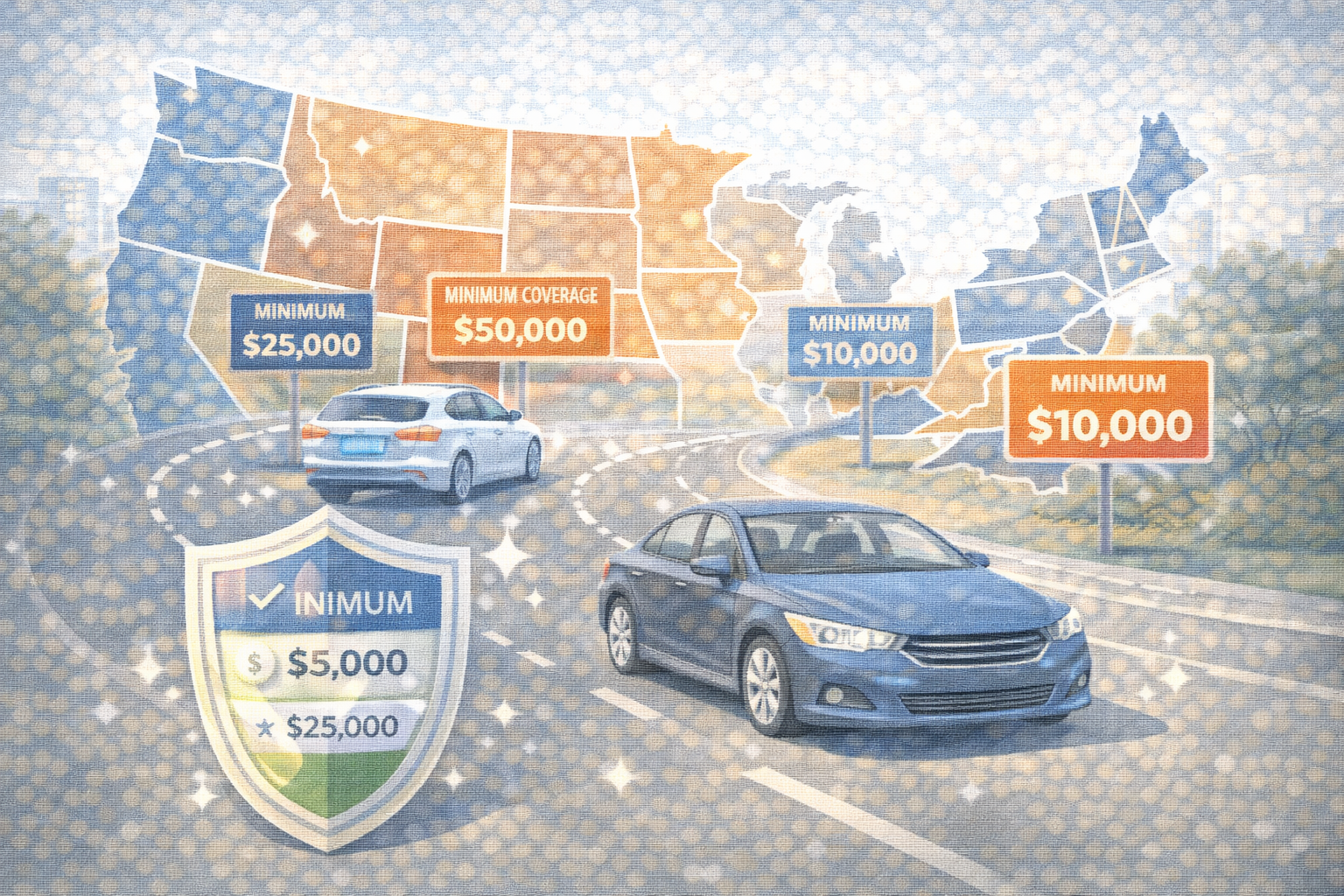
Auto insurance is one of the most heavily regulated forms of insurance in the United States. While nearly every driver understands that insurance is required, far fewer understand how auto insurance minimum coverage limits by state actually work. Because insurance regulation is handled at the state level, legal requirements vary widely depending on where a vehicle is registered.
Within the broader framework of Insurance by State, auto insurance laws establish minimum coverage limits designed to ensure that drivers can meet basic financial responsibility obligations after an accident. These limits are intended to protect both accident victims and the public, but they differ significantly across jurisdictions.
This article explains how auto insurance minimum coverage limits are set, why they vary by state, and what drivers should know to remain legally compliant.
What Are Auto Insurance Minimum Coverage Limits?
Auto insurance minimum coverage limits are the lowest amounts of insurance coverage a driver is legally required to carry under state law. These limits usually apply to liability insurance, which covers damages and injuries caused to others.
Minimum coverage typically includes:
-
Bodily injury liability per person
-
Bodily injury liability per accident
-
Property damage liability
Limits are often written in a shorthand format such as 25/50/25, representing thousands of dollars in coverage.
Why States Set Their Own Auto Insurance Requirements
Under the Insurance by State regulatory model, each state determines its own auto insurance standards. This approach allows states to tailor requirements based on:
-
Population density and traffic volume
-
Average medical and repair costs
-
Legal environments and litigation risk
-
Historical accident data
As a result, auto insurance minimum coverage limits by state reflect local risk conditions rather than a uniform national standard.
Common Liability Coverage Components Explained
Bodily Injury Liability
Bodily injury liability covers medical expenses, lost wages, and legal costs for injuries sustained by others in an accident you cause.
States specify:
-
A per-person minimum
-
A per-accident minimum
Property Damage Liability
Property damage liability covers damage to another person’s vehicle or property.
Minimum limits for property damage vary significantly and are often lower than real-world repair costs.
Variations in Auto Insurance Minimums Across States
States can be broadly grouped based on their auto insurance minimum requirements:
States with Lower Minimum Limits
-
Lower legal thresholds
-
Greater reliance on personal responsibility
-
Higher financial risk for drivers
States with Moderate Minimum Limits
-
Balanced consumer protection
-
Standard enforcement mechanisms
States with Higher Minimum Limits
-
Reflect higher medical or legal costs
-
Stronger consumer protection policies
Understanding these differences is a core part of navigating Insurance by State compliance.
No-Fault vs. At-Fault Auto Insurance Systems
Another major distinction in auto insurance laws is whether a state follows a no-fault or at-fault system.
No-Fault States
-
Require personal injury protection (PIP)
-
Limit lawsuits for minor injuries
-
Emphasize quicker claims processing
At-Fault States
-
Assign liability to the responsible driver
-
Allow broader legal action
-
Typically rely more heavily on liability coverage
No-fault laws directly influence auto insurance minimum coverage limits by state.
States with Alternative Financial Responsibility Options
Some states allow drivers to meet insurance requirements through alternatives such as:
-
Surety bonds
-
Cash deposits
-
Self-insurance certificates
These options are usually limited to individuals or entities that meet strict financial criteria and are less common among average drivers.
Penalties for Failing to Meet Auto Insurance Minimums
Failure to carry the required minimum auto insurance can result in serious consequences, including:
-
Fines and administrative fees
-
License and registration suspension
-
Vehicle impoundment
-
SR-22 filing requirements
Penalties vary by state and often escalate with repeat offenses, reinforcing the importance of Insurance by State compliance.
Why Minimum Auto Insurance Coverage Is Often Insufficient
While meeting minimum requirements ensures legal compliance, it does not guarantee adequate financial protection.
Common risks of minimum coverage include:
-
Medical expenses exceeding liability limits
-
Total loss vehicle damage surpassing property damage coverage
-
Personal assets exposed to lawsuits
Minimum coverage protects the state’s legal interest—not necessarily the driver’s financial stability.
Recommended Coverage Beyond State Minimums
Insurance professionals often recommend higher liability limits to account for:
-
Rising healthcare costs
-
Increased vehicle repair expenses
-
Greater litigation risk
Understanding auto insurance minimum coverage limits by state is the starting point, not the end goal, of responsible coverage planning.
How to Check Your State’s Auto Insurance Requirements
Drivers should verify requirements through:
-
State Department of Motor Vehicles (DMV)
-
State Department of Insurance
-
Official state statutes
-
Licensed insurance professionals
Because Insurance by State rules change periodically, ongoing review is essential.
How Auto Insurance Laws Affect Interstate Drivers
Drivers who relocate or frequently travel across state lines must ensure their policies comply with their state of registration.
Insurance policies often adjust coverage automatically when driving in other states, but minimum compliance is based on the home state’s laws.
The Role of Auto Insurance in Public Safety Policy
State-mandated auto insurance requirements serve several public policy goals:
-
Protecting accident victims
-
Reducing uninsured driving
-
Ensuring financial responsibility
Auto insurance minimum coverage limits by state are a critical component of broader transportation safety systems.
Conclusion
Auto insurance minimum coverage limits by state reflect the decentralized nature of insurance regulation in the United States. While these limits establish a legal baseline, they vary widely and often fall short of providing comprehensive financial protection.
For drivers, understanding Insurance by State is essential to maintaining legal compliance, avoiding penalties, and protecting personal assets. Auto insurance laws are not static, and staying informed about state-specific requirements is a vital part of responsible vehicle ownership.